Chapter 1. A Childhood of Songs and Stories
Mikhas Zaretsky was born Mikhail Kasyankou on 20 November 1901 in the village of Vysoki Haradzets, in what is now the Vitebsk region of Belarus. He grew up in a family where music and singing were part of everyday life. His father, a village deacon, loved music and directed a church choir, while his mother also enjoyed singing.
The sounds of his childhood became part of the world he carried within him. In the village, people shared stories, songs, worries, and hopes. Everyday life offered a close view of human character: its kindness, contradictions, ambitions, and disappointments.
As a boy, he studied at a religious school in Orsha and later attended the Mogilev seminary. The revolutionary upheavals of 1917 interrupted his education, and he left before completing his studies.
He worked in several jobs before becoming a teacher in 1919. These experiences brought him into contact with people from different backgrounds and helped him observe the rapid changes transforming Belarusian society.
The young man who would become Mikhas Zaretsky was learning to pay attention. He watched how people responded to uncertainty, how old traditions met new ideas, and how historical events entered ordinary homes.
Those observations would later become essential to his writing.
Chapter 2. Finding a Voice in Belarusian Literature
Zaretsky began publishing his work in 1922, during a period of remarkable activity in Belarusian literature. A new generation of writers was exploring the possibilities of the Belarusian language and searching for ways to describe a rapidly changing country.
He joined the literary association Maladniak and became an editor of its journal in 1926. In 1927, he helped establish another literary association, Polymya.
His early collections included U vіry zhyccya (In the Whirl of Life) and Pela vjasna (Spring Sang), both published in 1925, followed by Pad soncam (Under the Sun) in 1926.
Zaretsky became known for emotionally expressive prose, vivid characters, and an interest in the psychological consequences of social change. His stories explored the tension between individual desires and collective expectations, the clash between traditional life and new political realities, and the difficulty of choosing one’s own path.
He also wrote novels, plays, literary criticism, and essays, and translated works of international literature into Belarusian.
For Zaretsky, literature was more than entertainment. It was a way to examine how people lived through history and how they tried to understand themselves in a world that seemed to change faster than they could adapt.
His work helped establish him as an important figure in Belarusian prose during the 1920s and 1930s.
Chapter 3. When Literature Became Dangerous
The political atmosphere surrounding Belarusian writers gradually grew more oppressive. Cultural institutions that had once encouraged literary experimentation increasingly demanded ideological conformity. Writers who expressed independent opinions or defended aspects of national cultural life could become targets of suspicion.
Zaretsky took part in literary and cultural debates, including discussions about theatre and cinema. Some of his public positions were interpreted by Soviet authorities as signs of so-called national democracy, a label increasingly used against people suspected of thinking independently of official ideology.
In 1929, he was expelled from the Communist Party. Yet he continued to write.
His novel Vjazmo, published in 1932, addressed collectivisation and became one of his best-known works. His writing reflected the conflicts of a society undergoing profound transformation, including the pressure placed on individuals by political campaigns and social expectations.
By 1934, Zaretsky had become a member of the Writers’ Union of the Byelorussian Soviet Socialist Republic. He later worked in the literature and arts department of the Belarusian Academy of Sciences.
From the outside, his career still appeared to be progressing. He had published books, participated in literary organisations, and contributed to the development of Belarusian culture.
But the space for independent thought was shrinking. Political suspicion increasingly reached into writers’ personal lives. Professional recognition offered no reliable protection against arrest.
The very institutions through which Zaretsky had built his literary career existed within a system that was becoming hostile to the freedom of expression literature required.
Chapter 4. Arrest and the Night of the Executed Poets
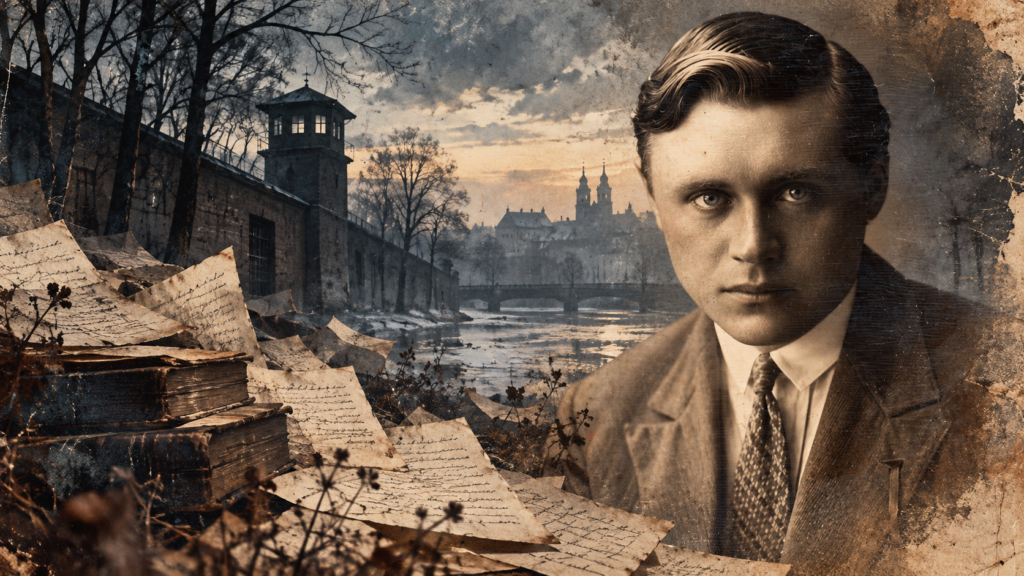
On 3 November 1936, Soviet authorities arrested Zaretsky in Minsk. He was accused of involvement in an alleged anti-state organisation, amid the expanding political purges of Stalin’s Great Terror.
The accusations belonged to a wider pattern in which writers, scholars, public officials, and other intellectuals were branded enemies of the state. Many were imprisoned or executed after proceedings that offered no meaningful opportunity to defend themselves.
On 28 October 1937, Zaretsky was sentenced to death by a Soviet extrajudicial body. The following day, 29 October, he was executed in Minsk.
His death occurred during the mass killings of Belarusian intellectuals in late October 1937. On the night of 29–30 October, more than one hundred representatives of Belarusian cultural, scientific, and public life were executed in the NKVD prison in Minsk.
The event became known as the Night of the Executed Poets. The name commemorates not only poets but also prose writers, scholars, and other people who had helped shape Belarusian intellectual and cultural life.
Zaretsky’s death was part of an assault that reached far beyond one writer. Families lost loved ones. Literary communities were shattered. Manuscripts and unfinished projects disappeared. Readers were separated from authors whose work had helped them understand their own society.
Political repression sought to eliminate not only people but also the ideas, memories, and cultural traditions associated with them.
Zaretsky was only thirty-five years old when he was killed. His literary career, which had begun little more than a decade earlier, was brought to an abrupt end.
Chapter 5. The Words That Remained
For years, the stories of repressed Belarusian writers were difficult to discuss openly. Their names could be pushed to the margins of public memory, while their families and readers lived with the consequences of persecution.
On 7 December 1957, Zaretsky was posthumously rehabilitated by Soviet authorities. The decision came too late to restore his life or recover everything that had been lost.
Yet his work survived.
Today, Mikhas Zaretsky is remembered as an important figure in the development of modern Belarusian prose. His short stories, novels, plays, criticism, and translations reflect a writer deeply interested in human nature and the forces that shape society.
His life also stands as a reminder of the vulnerability of cultural freedom. A society can lose generations of writers not because they have nothing more to say, but because those in power fear what independent voices might reveal.
Remembering Zaretsky means more than recording his arrest and execution. It means returning to the literature he created, recognising the cultural world to which he contributed, and acknowledging the human cost of repression.
The Night of the Executed Poets remains a painful chapter in Belarusian history. But remembrance can become an act of resistance against the erasure that repression seeks to achieve.
A writer’s life can be taken. Books can be confiscated, manuscripts destroyed, and names excluded from public discussion. Yet when later generations read those works, study that history, and speak the names of the people who were killed, the attempt to erase them remains incomplete.
Mikhas Zaretsky’s story reminds us that literature is not separate from freedom. It depends on the ability to observe, question, imagine, and express the complexity of human life.
His words belong to Belarusian cultural memory—not because his life ended in violence, but because his writing helped give shape to a culture that continued beyond him.
A voice can be silenced in its own time, yet still speak to generations it will never meet.
Historical Note
This biography summarises documented events in Mikhas Zaretsky’s life. It does not invent personal dialogue or attribute fictional quotations to him. The title The Night of the Executed Poets refers to the mass repression of Belarusian cultural and intellectual figures, including writers who were not poets.
Sources for Verification
- Belarusian literature reference resources and biographical records on Mikhas Zaretsky.
- Belarusian historical archives and memorial resources documenting the executions of October 1937.
- Universal Lithuanian Encyclopedia, entry on Mikhas Zaretsky.