Chapter 1. A Boy from Juknėnai
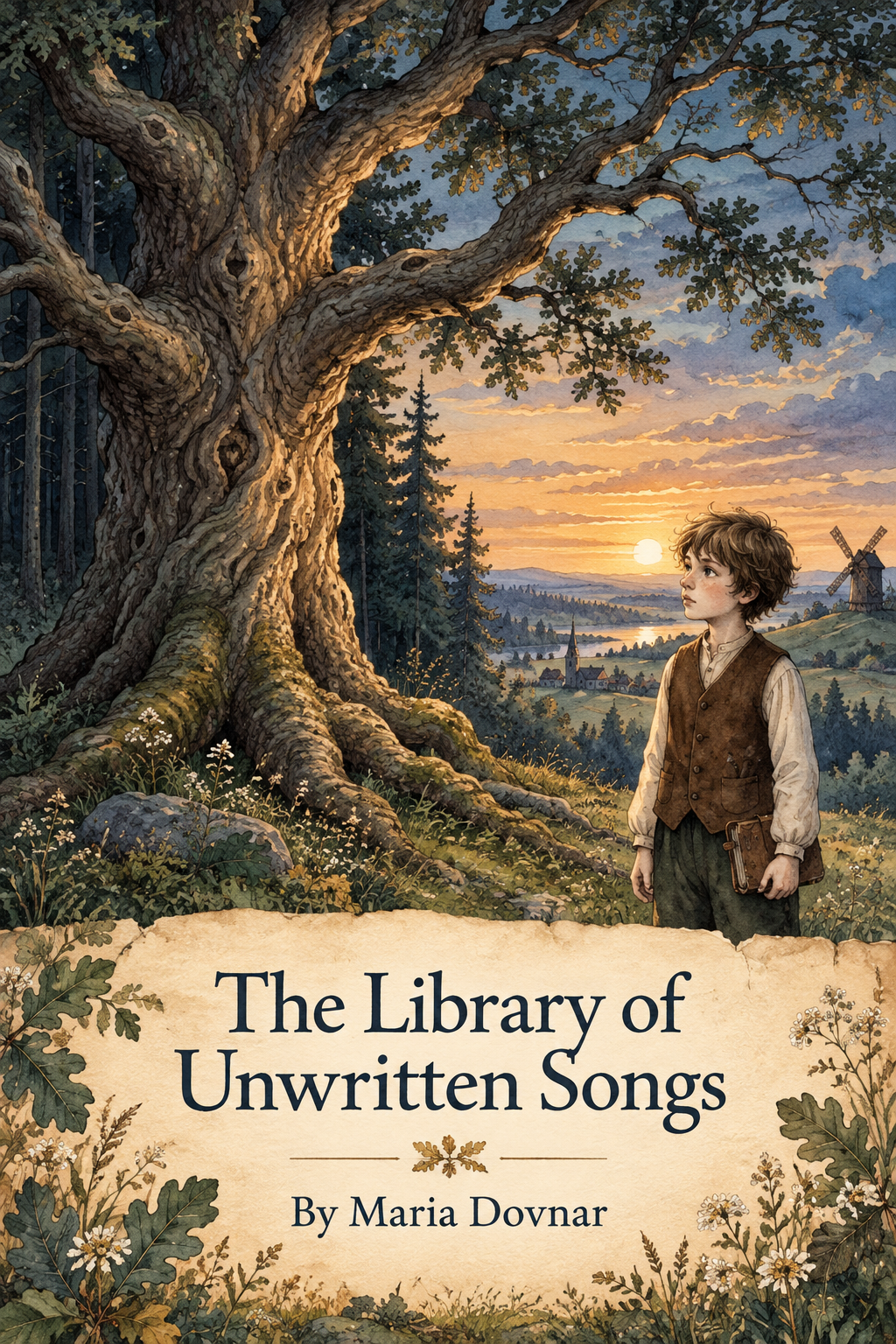
Antanas Miškinis was born on 11 February 1905 in the village of Juknėnai in northeastern Lithuania. He grew up surrounded by the rhythms of rural life, where the seasons shaped people’s work and traditions, and songs and stories carried memories from one generation to the next.
The Lithuanian language and the world of ordinary people would remain important to him throughout his life. As a young man, he pursued his education and developed a deep interest in literature. Words became more than a way to describe the world: they offered a way to understand it.
In 1928, Miškinis published his first poetry collection, Balta paukštė (The White Bird). The book marked the beginning of his literary journey and introduced a voice that would become part of Lithuania’s cultural life.
For Miškinis, poetry was not separate from the place where he had grown up. The memories of home, the sounds of the Lithuanian language, and the lives of ordinary people became part of the world he carried into his writing.
Chapter 2. The Voice of a Living Lithuania
During the 1930s, Miškinis became increasingly involved in Lithuania’s literary and cultural life. He worked as a teacher and editor and participated in literary activities that connected writers with a wider public. He also contributed to radio programmes, helping literature reach people beyond the printed page.
His poetry drew strength from the rhythms of Lithuanian speech and folk songs. It spoke of the homeland, human dignity, spiritual searching, and the experiences of everyday life. Rather than treating Lithuania as an abstract idea, his work reflected a country made of villages, familiar voices, landscapes, and people.
But the world around him was changing. In 1940, the Soviet Union occupied Lithuania. Political repression increasingly threatened the country’s independence and its cultural and civic life. For writers and intellectuals, it became harder to express their beliefs freely.
Miškinis continued to write and to take part in the life of his country. His attachment to Lithuania was not merely a literary theme. It was part of his identity, something that political power could restrict but could not easily erase.
Chapter 3. The Price of Resistance
After the Soviet occupation, Miškinis became involved in Lithuanian resistance activities. He contributed to the underground publication Laisvės žvalgas (Freedom Scout), which was connected with the struggle against Soviet rule.
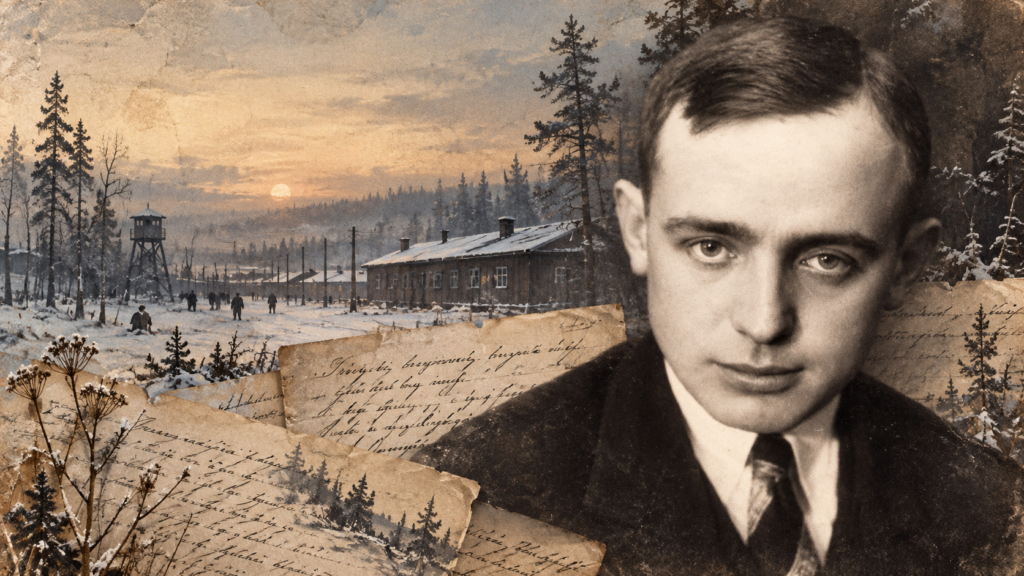
In February 1948, he was arrested. Soviet authorities sentenced him to twenty-five years in a forced-labour camp. He was sent away from Lithuania and endured imprisonment in the Soviet camp system, including locations associated with Mordovia, the Kemerovo region, and Omsk.
The world of a prisoner was painfully restricted. Movement was controlled, daily life was harsh, and separation from family and homeland could make the future seem almost impossible to imagine. Yet even there, Miškinis continued to write.
His poems from this period, including those associated with Psalmės (Psalms), expressed suffering, faith, longing, and the struggle to preserve one’s inner life. Paper was scarce, and writing could be difficult or dangerous. Words might have to be kept on scraps, remembered, or shared quietly.
The man who had once written about Lithuania’s living voice now carried that voice into a place designed to silence him. His circumstances had changed, but the language in which he thought and dreamed remained his own.
Chapter 4. Poems That Travelled Without Paper
In the camps, a poem could become something more than a piece of writing. It could be a message passed from one person to another, a fragment memorised by someone who feared losing it, or a few lines repeated quietly to keep despair at bay.
Miškinis’s poetry survived through the fragile human ways in which words are preserved. When paper was unavailable, memory could become an archive. When a manuscript was lost, someone who had heard the poem might still remember it. Each person who carried a line forward helped protect something that imprisonment could not entirely destroy.
In 1956, Miškinis returned to Lithuania. His return did not mean that freedom had been fully restored. Former prisoners often faced restrictions and suspicion, and the years of exile could not simply be undone. He had lost time, endured hardship, and been separated from the country that had shaped him.
Yet Lithuania was still there: its language, its landscapes, its memories, and the people who could recognise themselves in his words.
The survival of his poems reminds us that cultural memory does not depend only on libraries and printed books. Sometimes it survives because one person remembers what another has said and refuses to let it disappear.
Chapter 5. The Home Words Cannot Lose
After returning, Miškinis continued his literary work. He wrote poetry, translated literary works, and reflected on his experiences. His later life unfolded under the continuing constraints of Soviet rule, but writing remained an essential part of his relationship with Lithuania.
He died in Vilnius on 16 December 1983 and was buried at Antakalnis Cemetery. His life had carried him from a rural Lithuanian childhood into the country’s literary world, then through imprisonment and exile, and finally back to his homeland.
Today, Miškinis’s story is not only the story of a poet who suffered political repression. It is also a story about the fragile ways in which freedom survives: through language, memory, creativity, and the bonds between people.
A poem can be hidden, confiscated, or forbidden. Its author can be forced far from home. But words that have entered another person’s memory may continue travelling long after the original page has vanished.
Antanas Miškinis carried Lithuania within him when he was far away from its fields and villages. Through his poetry, he helped preserve a part of the country’s voice for those who would come after him.
His life leaves us with a quiet but enduring thought: home is not only the place where we live. It is also the language, memory, and humanity that we refuse to surrender.
Sources for historical verification
- Maironis Lithuanian Literature Museum
- Visuotinė lietuvių enciklopedija (Universal Lithuanian Encyclopedia)
- Lithuanian Writers’ Union
- UNESCO Memory of the World Register
Editorial note: The historical chapters summarise Miškinis’s documented life. The descriptions of the emotional experience of imprisonment are contextual narrative, not claimed quotations from the poet or eyewitness testimony.