Chapter 1. A Boy Who Saw the World Differently
Mykhail Semenko was born in Kybyntsi, a village in the Poltava region of Ukraine, on 31 December 1892. His mother, Maria Proskurivna, was a writer, and literature was part of the world into which he grew up.
As a young man, Semenko studied in Kursk and later attended the Psychoneurological Institute in Saint Petersburg. He encountered new artistic ideas and began to explore poetry as a space for experimentation rather than simply a place to preserve familiar traditions.
In 1913, his first poetry collection, Prelude, appeared in print. But Semenko was already looking beyond the literary styles that had shaped earlier generations. He wanted Ukrainian poetry to speak to the changing world around him: its crowded streets, new machines, restless energy, and unfamiliar possibilities.
For Semenko, a poem did not have to sound like a poem written a hundred years earlier. It could surprise, disturb, amuse, or challenge its reader. The page itself could become a place for invention.
His search for new forms would soon make him one of the most distinctive figures in Ukrainian modernist literature.
Chapter 2. The Futurist Who Challenged Tradition
In 1914, Semenko helped establish the first Ukrainian Futurist group in Kyiv with artists Vasyl Semenko and Pavlo Kovzhun. They adopted distinctive artistic names—Mykhail, Bazyl, and Pavl—and began experimenting with new ways of combining literature and visual art.
Their movement questioned the assumption that poetry should follow inherited rules simply because those rules had existed for generations. Semenko believed that Ukrainian literature needed to participate actively in modern cultural life rather than remain confined by established expectations.
His collections Derzannia and Kvero-Futuryzm, published in 1914, introduced readers to his provocative approach. His writing experimented with sound, rhythm, unusual imagery, and the visual arrangement of words.
Semenko’s challenges to literary tradition could be deliberately confrontational. His famous 1914 polemic against the veneration of Taras Shevchenko provoked controversy because Shevchenko held an especially important place in Ukrainian cultural identity.
Yet Semenko’s intention was not simply to destroy the past. He wanted to prevent tradition from becoming untouchable and to make room for new artistic possibilities.
He argued, through his work and public interventions, that Ukrainian poetry could be modern, inventive, and connected to international avant-garde movements while retaining its own cultural identity.
Chapter 3. The City, the Page, and the New Generation
During the 1920s, Semenko became an organizer of Ukraine’s avant-garde literary scene. He helped establish several artistic groups, including Flamingo and the Association of Panfuturists, and continued to publish experimental poetry and theoretical writings.
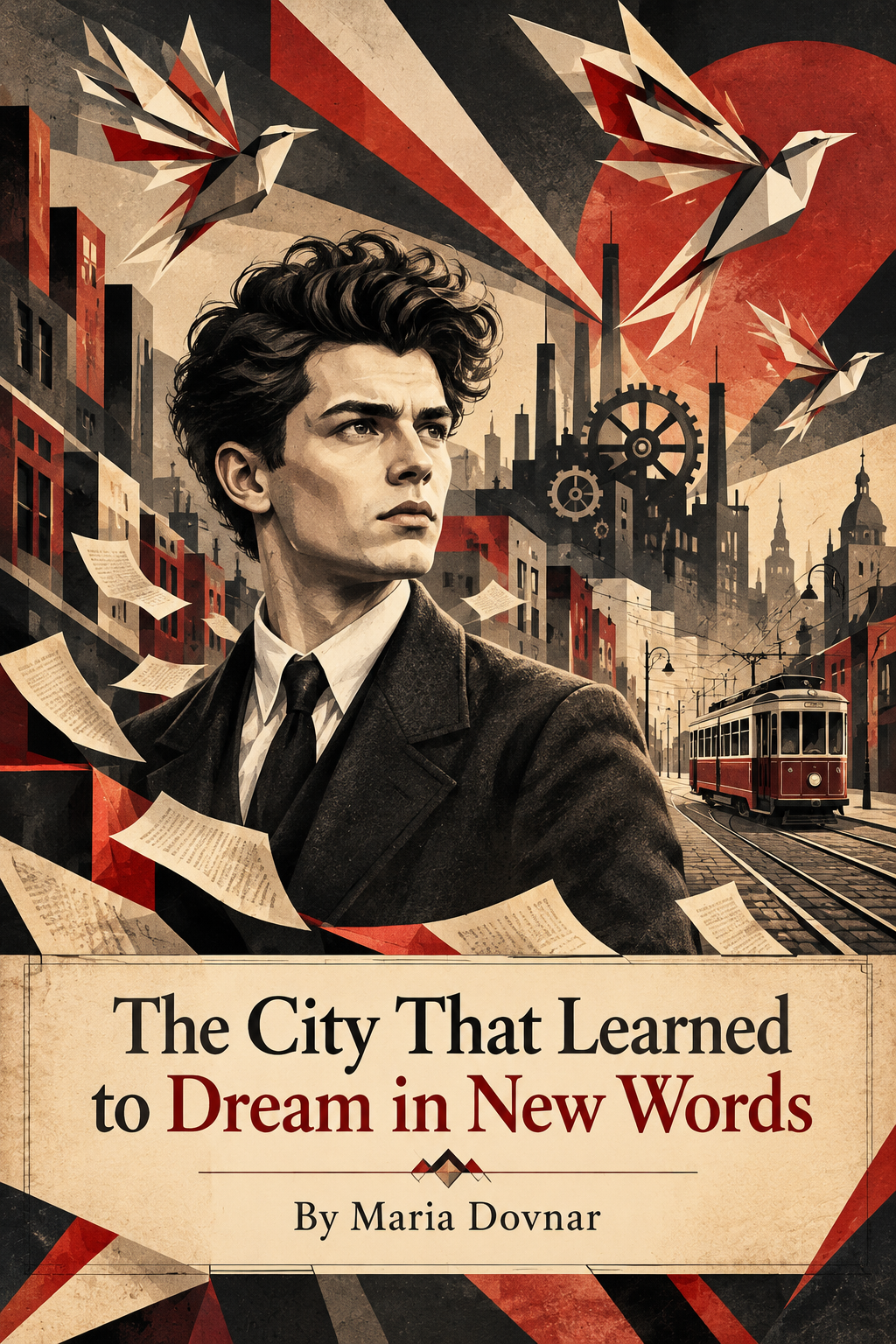
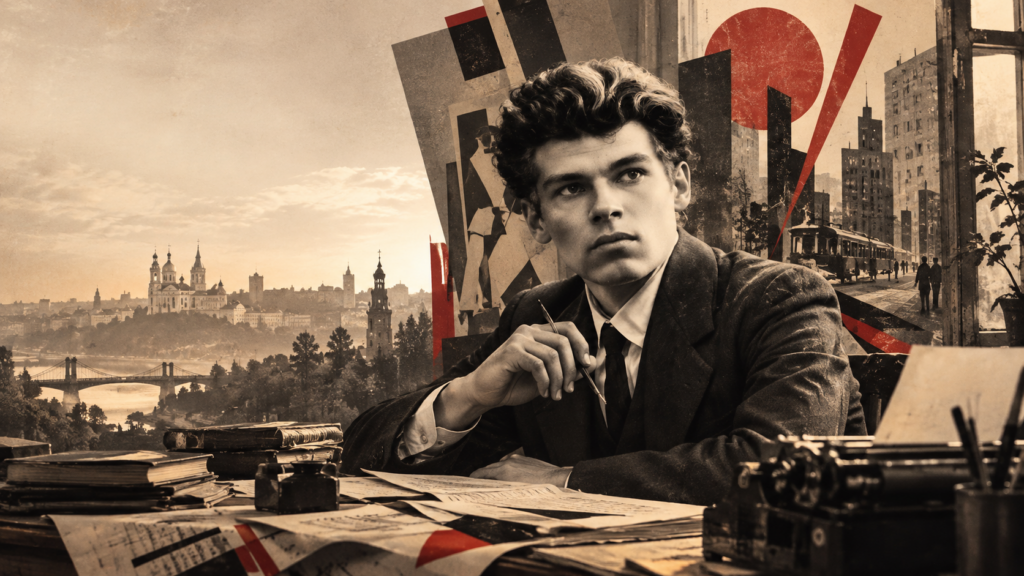
He was particularly interested in urban life. Streets, transport, industrial landscapes, advertisements, crowds, and the accelerating rhythm of modern society entered his poetry. Instead of treating these subjects as unworthy of serious literature, he made them part of a new poetic language.
Semenko also explored the relationship between words and images. Some of his poems used visual arrangements that made the page itself part of the artistic experience. His interests extended into cinema, and he later worked in the Ukrainian film industry, including as a leading editor at the Odesa film factory.
In 1927, he founded the literary group Nova Generatsiia (“New Generation”) and edited its journal, which became an important platform for discussions of literature, visual art, architecture, and cinema.
The group reflected his belief that artistic innovation involved more than writing new poems. It required new conversations between writers, artists, critics, and audiences.
By the end of the decade, however, the political environment had changed dramatically. Soviet cultural authorities increasingly demanded conformity to official ideological expectations. Independent artistic movements faced mounting restrictions, and the space for experimentation narrowed.
Semenko continued to write, but the freedom that had made the Ukrainian avant-garde possible was being steadily dismantled.
Chapter 4. Arrest and Execution
By the mid-1930s, Soviet repression was devastating Ukraine’s cultural and intellectual communities. Writers, artists, scholars, and theatre practitioners who had helped build modern Ukrainian culture were arrested, accused of political crimes, or executed.
On 26 April 1937, Semenko was arrested in Kyiv at the Hotel Continental. The authorities accused him of belonging to an alleged Ukrainian fascist-nationalist terrorist organization. The organization cited in the accusations was fictitious.
Interrogations followed, and the case formed part of the wider campaign against Ukrainian intellectuals during Stalin’s Great Terror. On 23 October 1937, a Soviet military tribunal sentenced Semenko to death.
The sentence was carried out in Kyiv on 24 October 1937. He was 44 years old.
His execution took place in a Kyiv prison, and his body was buried in a mass grave in the Bykivnia area, where victims of Soviet repression were secretly buried.
Semenko’s fate was part of the destruction of the generation now known as the Executed Renaissance—a generation of Ukrainian writers and artists whose work had transformed the country’s cultural life during the 1920s and early 1930s.
His death silenced a poet who had spent his career challenging artistic boundaries, but it did not erase the literary movement he helped create.
Chapter 5. The Future Hidden in the Poems
For years, Soviet censorship and official literary judgments limited the recognition of Semenko’s work. His experiments were often difficult to reconcile with the cultural rules imposed by the authorities, and his execution interrupted a career that had already transformed Ukrainian poetry.
In 1957, Semenko was posthumously rehabilitated. The legal restoration of his name helped make possible a fuller reassessment of his life and work, although the recovery of suppressed cultural history remained a long process.
Today, Semenko is remembered as a founder and major theorist of Ukrainian Futurism. His poetry expanded the possibilities of Ukrainian literary language, bringing urban experience, visual experimentation, unconventional rhythms, and provocative ideas into the centre of artistic debate.
His legacy also raises an important question: what happens when a society tries to dictate how artists must think and create?
Semenko’s life shows how vulnerable cultural innovation can become when independent thought is treated as a threat. His work reminds readers that literature is not merely a record of accepted ideas. It is also a space where people can question conventions, imagine alternatives, and express experiences that have not yet found their language.
His poems continue to speak to new generations because the future he sought was never simply about machines or modern cities. It was about the possibility of making art differently.
Remembering Mykhail Semenko means recovering both the boldness of his artistic experiments and the human story of a writer whose life was cut short by political repression.