Chapter 1. A Boy from the Wide Steppes
Yevhen Pluzhnyk was born on 26 December 1898 in Kantemyrivka, in the Voronezh region of the Russian Empire, to a family with Ukrainian roots. The landscapes of the steppe, the rhythms of everyday speech, and the hardships of ordinary people would later resonate in his poetry.
As a young man, he studied at several gymnasiums and eventually moved to the Poltava region with his family. He worked as a rural teacher, sharing his knowledge with children while continuing to develop his own literary interests.
His path to becoming a poet was neither simple nor direct. He explored different forms of education and theatre before finding his lasting calling in literature.
Chapter 2. Finding His Voice in Kyiv
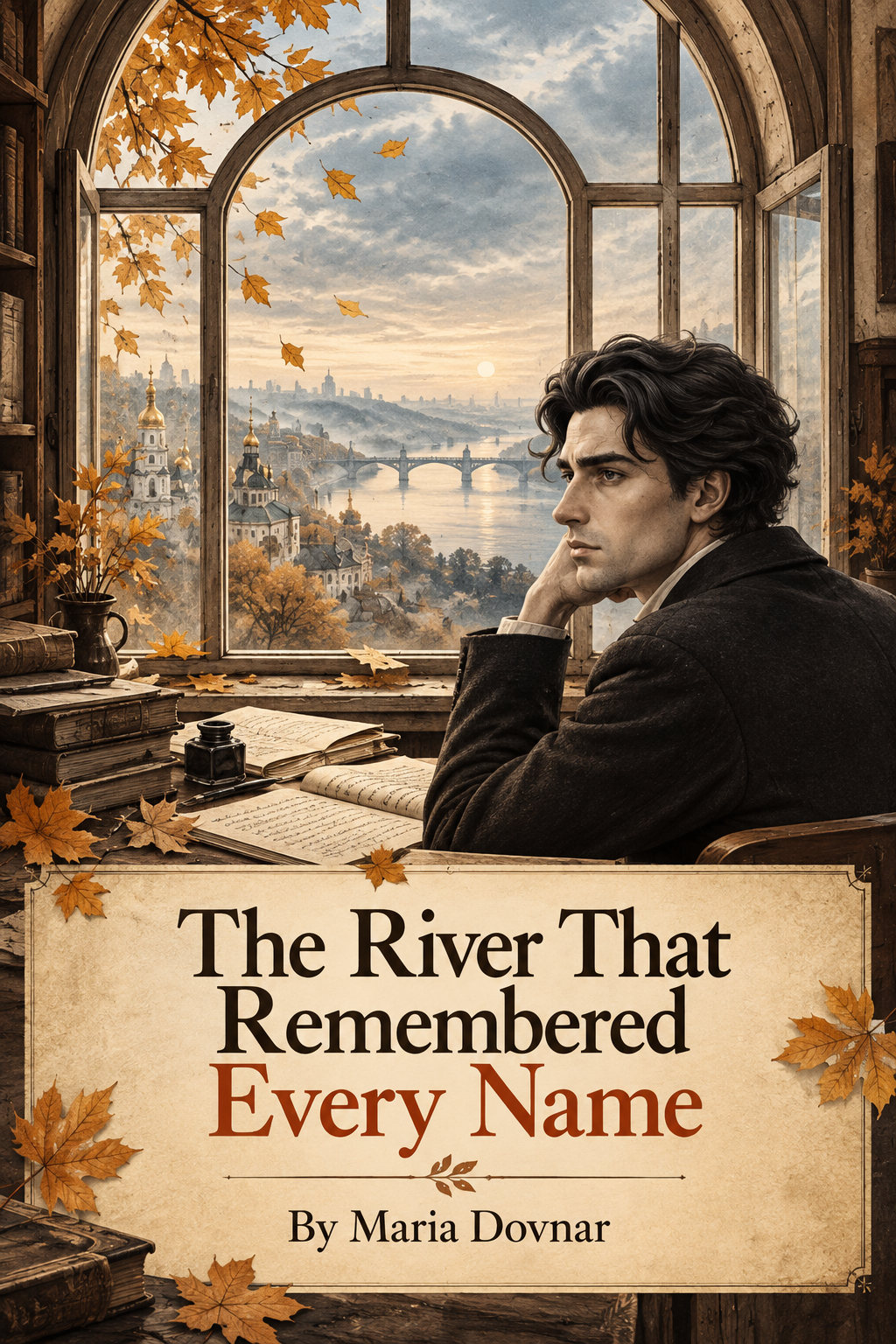
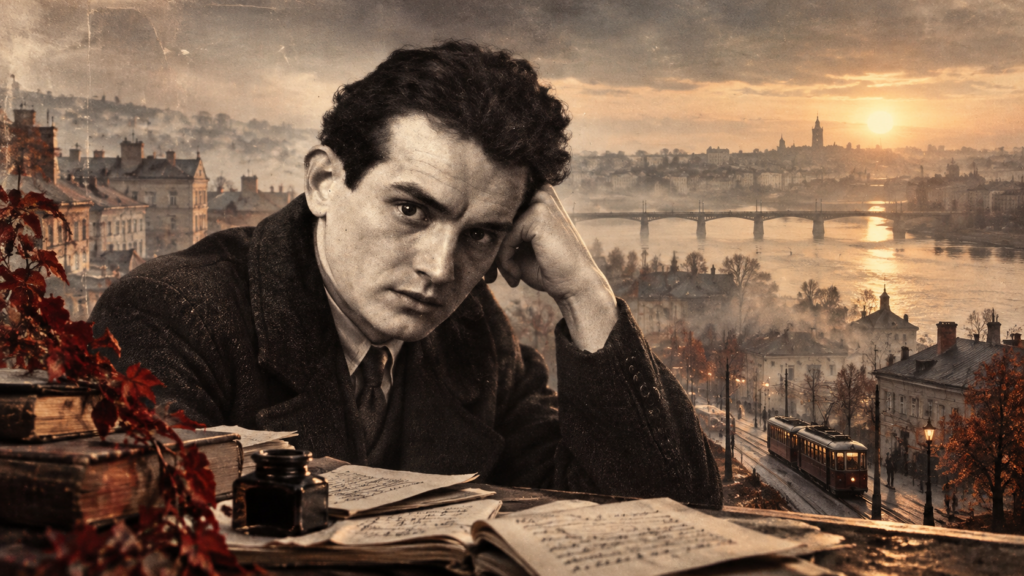
In the early 1920s, Pluzhnyk settled in Kyiv, a city alive with artistic experimentation and new literary movements.
He studied at the Mykola Lysenko Music and Drama Institute but did not complete his education. Instead, literature gradually became the centre of his life.
His early Ukrainian poems appeared in print under the pseudonym Kantemyrіanyn. He became associated with Kyiv literary groups, including Aspys, Lanka, and MARS, and joined a generation determined to develop modern Ukrainian literature.
Pluzhnyk’s voice was distinctive. Rather than relying on grand declarations, he explored complex emotions through restrained language, philosophical reflection, and precise images.
Chapter 3. The Poetry of Days and Early Autumn
In 1926, Pluzhnyk published his first poetry collection, Dni (Days). A year later, Rannia osin (Early Autumn) followed.
His poetry often contemplated the passage of time, the vulnerability of human life, the beauty of nature, and the moral cost of violence. His writing was quiet but never empty: beneath its apparent simplicity lay difficult questions about how people should live and what they owe one another.
He also wrote prose and drama. His novel Neduha (Illness), published in 1928, was soon banned from circulation.
As political pressure on Ukrainian writers intensified, Pluzhnyk’s reflective literary style came under hostile criticism. His work did not fit comfortably into the demands imposed on writers by the Soviet authorities.
Chapter 4. The Sentence That Could Not Silence Him
On 5 December 1934, Pluzhnyk was arrested amid the Soviet regime’s expanding repression of Ukrainian intellectuals.
He was accused in a fabricated political case and sentenced to death in March 1935. The sentence was subsequently commuted to ten years of imprisonment, and he was sent to the Solovki prison camp in the White Sea.
Pluzhnyk had suffered from tuberculosis for years. His health deteriorated under imprisonment, and he spent much of his remaining time in the camp hospital.
Even as his life narrowed to a hospital bed, his connection to literature and Ukraine remained powerful. He continued to write when he was able.
On 2 February 1936, he died of tuberculosis at the age of thirty-seven. He was buried in a camp cemetery; his grave has not survived.
Chapter 5. The River That Remained
Pluzhnyk did not live to see his literary legacy fully recognised.
His collection Rivnovaha (Equilibrium) was published posthumously in an émigré edition in 1948. In 1956, he was rehabilitated after the authorities acknowledged the absence of a valid basis for his conviction.
Today, Pluzhnyk is remembered as one of the important voices of the Executed Renaissance—a generation of Ukrainian writers whose lives and careers were devastated by Soviet repression.
The Dnipro, Kyiv, and the landscapes of Ukraine remained powerful symbols of belonging in his life and work. His poetry reminds readers that courage does not always speak loudly. Sometimes it survives in a carefully chosen word, a remembered landscape, or a thought that refuses to disappear.
His life ended far from the river he longed to remember, but his writing continued to reach readers long after the prison doors had closed.