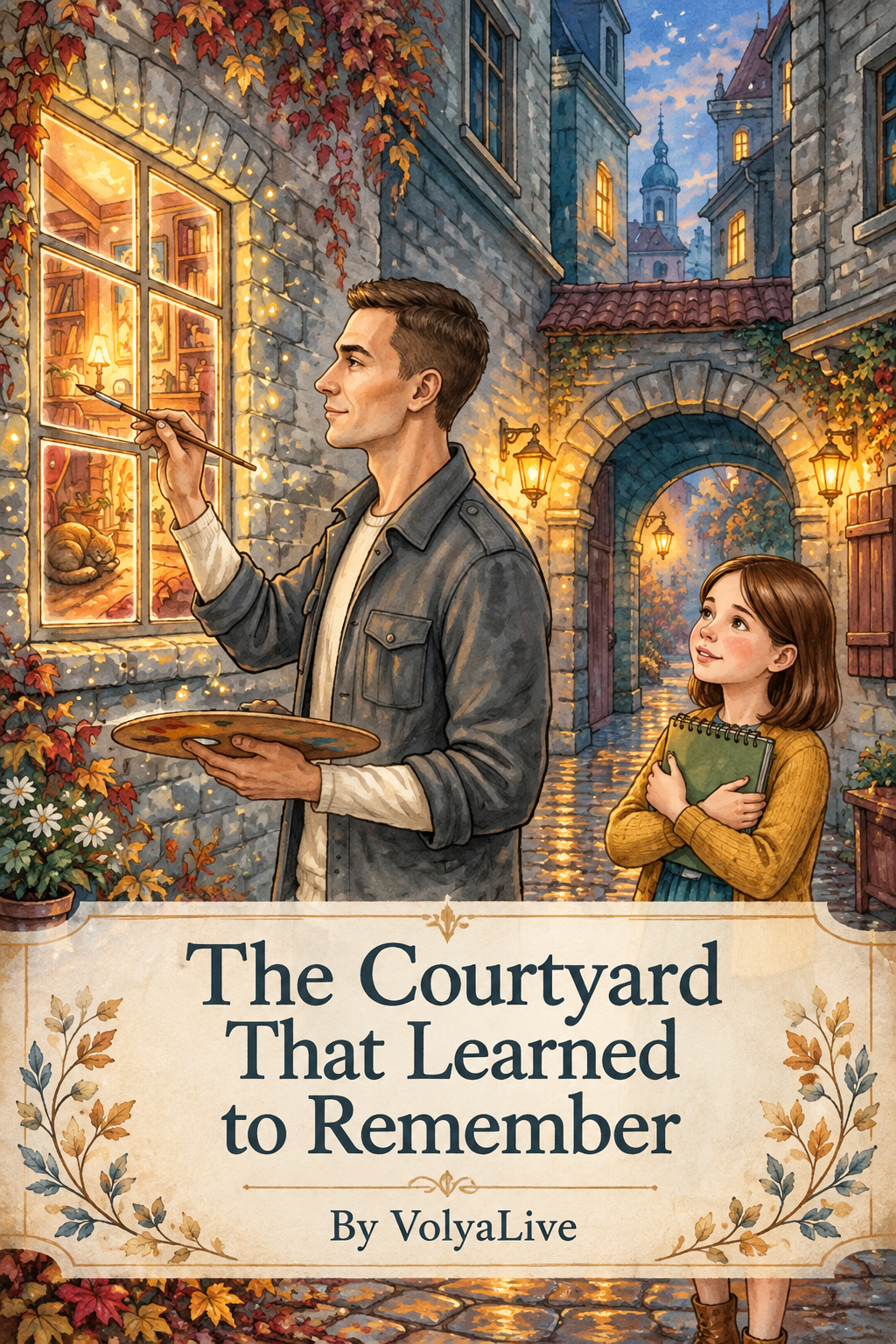
Chapter 1. An Artist from Minsk
Roman Ihorevich Bondarenko was a Belarusian artist and art teacher who lived in Minsk. He was 31 years old when he died in November 2020. People who knew him described him as calm, kind, good-humoured, and thoughtful—a person who preferred peaceful relationships to confrontation.
Bondarenko graduated from the Belarusian State Academy of Arts. He worked as a manager at a store belonging to the Ostrov Chistoty retail chain and also taught drawing to children. His education and work reflected two sides of his life: a practical profession and a continuing connection to art.
Before his death, Bondarenko had also completed military service in the internal troops, including service in a special-purpose unit. According to accounts from relatives and former fellow servicemen, he was remembered as an educated and approachable person who rarely sought conflict.
His story is important precisely because he was not a famous politician or a public leader. He was an ordinary resident of Minsk whose life became part of a much larger national tragedy.
Chapter 2. The Courtyard Called the Square of Change
In 2020, Belarus was shaken by mass protests following the disputed presidential election of 9 August. Across the country, people gathered to demand political change and accountability. In Minsk, courtyards and neighbourhood spaces became places where residents expressed solidarity through conversations, gatherings, murals, and ribbons in the national white-red-white colours.
One of these places became known as the Square of Change, a residential courtyard associated with a mural of two DJs who had played Viktor Tsoi’s song “Changes” at a pro-government event. Residents repeatedly restored the mural after it was painted over, and white-red-white ribbons became a visible sign of their community’s identity and hopes.
On the evening of 11 November 2020, people in civilian clothes and masks arrived to remove the ribbons. According to eyewitness accounts reported by independent media, Bondarenko came out into the courtyard and became involved in a confrontation with the visitors.
The disagreement escalated. Witnesses said Bondarenko was struck, fell, and was taken away in a minibus. The circumstances of the incident became the subject of public controversy and calls for an independent investigation.
For the residents of the courtyard, the place had represented a simple idea: people should be able to care for their neighbourhood and express themselves without fear.
Chapter 3. The Night That Changed Everything
After the incident, Bondarenko was taken to a police department and later brought to an emergency hospital in Minsk with severe head injuries. Doctors attempted to save his life, but he died on 12 November 2020 without recovering.
His death shocked Belarus. Human Rights Watch documented the reports of violence and called for accountability. The authorities offered their own account of the incident, while witnesses and human rights advocates disputed aspects of the official explanation and raised concerns about the treatment Bondarenko received after being taken away.
The circumstances of his death became a major public issue. People demanded a transparent investigation and questioned whether those responsible would be held accountable. The case also drew attention to wider concerns about violence against people during the 2020 protests.
It is important to remember the limits of what can be established from public reporting: Bondarenko’s fatal injuries and the sequence of his detention and hospitalisation were widely documented, while responsibility for the violence became a matter of dispute and demands for further investigation.
His death transformed a local tragedy into a national symbol. The loss of one man forced many people to confront a frightening question: could someone be in danger simply for stepping outside to see what was happening in his own courtyard?
Chapter 4. Flowers, Candles, and a City in Mourning
In the days after Bondarenko’s death, thousands of people gathered to honour his memory. Residents brought flowers and candles to the Square of Change. People stood together in silence, formed lines of solidarity, and called for justice. Memorial actions were reported in Minsk and other Belarusian cities.
The courtyard became more than a place where a violent incident had occurred. It became a memorial shaped by the people who visited it. Flowers and candles expressed grief, but they also communicated a refusal to treat the death as an insignificant event.
For many Belarusians, Bondarenko’s story represented the vulnerability of ordinary people amid political repression. His life was remembered not only through the circumstances of his death but also through accounts of his character: his education, his work with children, his humour, and his quiet manner.
A memorial does not restore a life. It cannot replace the person who should have returned home, continued working, taught another child to draw, or met friends in the courtyard. But remembrance can preserve a person’s humanity when public discussion threatens to reduce them to a name in a news report.
The flowers and candles left for Bondarenko became a way for people to say that his life mattered and that his death deserved an honest answer.
Chapter 5. The Person Behind the Symbol
Roman Bondarenko’s story is often remembered through the Square of Change and the events of November 2020. Yet it is equally important to remember the person who existed before those events: an artist by education, a teacher of drawing, a worker, a neighbour, a relative, and a friend.
He was not simply a symbol. He was a young man with a life of his own, a personality remembered by those who knew him, and a future that was cut short.
His death became part of the history of Belarus’s 2020 protests, when peaceful gatherings and expressions of solidarity were met with repression and violence. His name continues to be associated with calls for dignity, truth, and accountability.
Remembering Bondarenko means resisting the temptation to tell his story only through its final hours. It means preserving the ordinary details of his life and acknowledging the human cost of political violence.
The Square of Change began as a neighbourhood space. After November 2020, it also became a place of collective memory. The flowers, candles, and voices of those who gathered there carried a message beyond the courtyard: a person’s life cannot be reduced to the circumstances of their death.
Roman Bondarenko’s story remains a reminder that behind every name in a history of repression is a human being whose life, work, relationships, and hopes deserve to be remembered.
Historical Note
Roman Ihorevich Bondarenko (1989–2020) was a Belarusian artist and art teacher who lived in Minsk. On 11 November 2020, he was injured during an incident at the Square of Change and taken away in a minibus. After being detained and hospitalised with severe head injuries, he died on 12 November. His death prompted memorial gatherings and demands for accountability. The details of the incident and responsibility for the violence were contested in public reporting and became the subject of calls for a transparent investigation.
This biography distinguishes documented events from disputed claims. It does not attribute unverified quotations to Bondarenko or claim that all questions surrounding his death have been conclusively resolved.