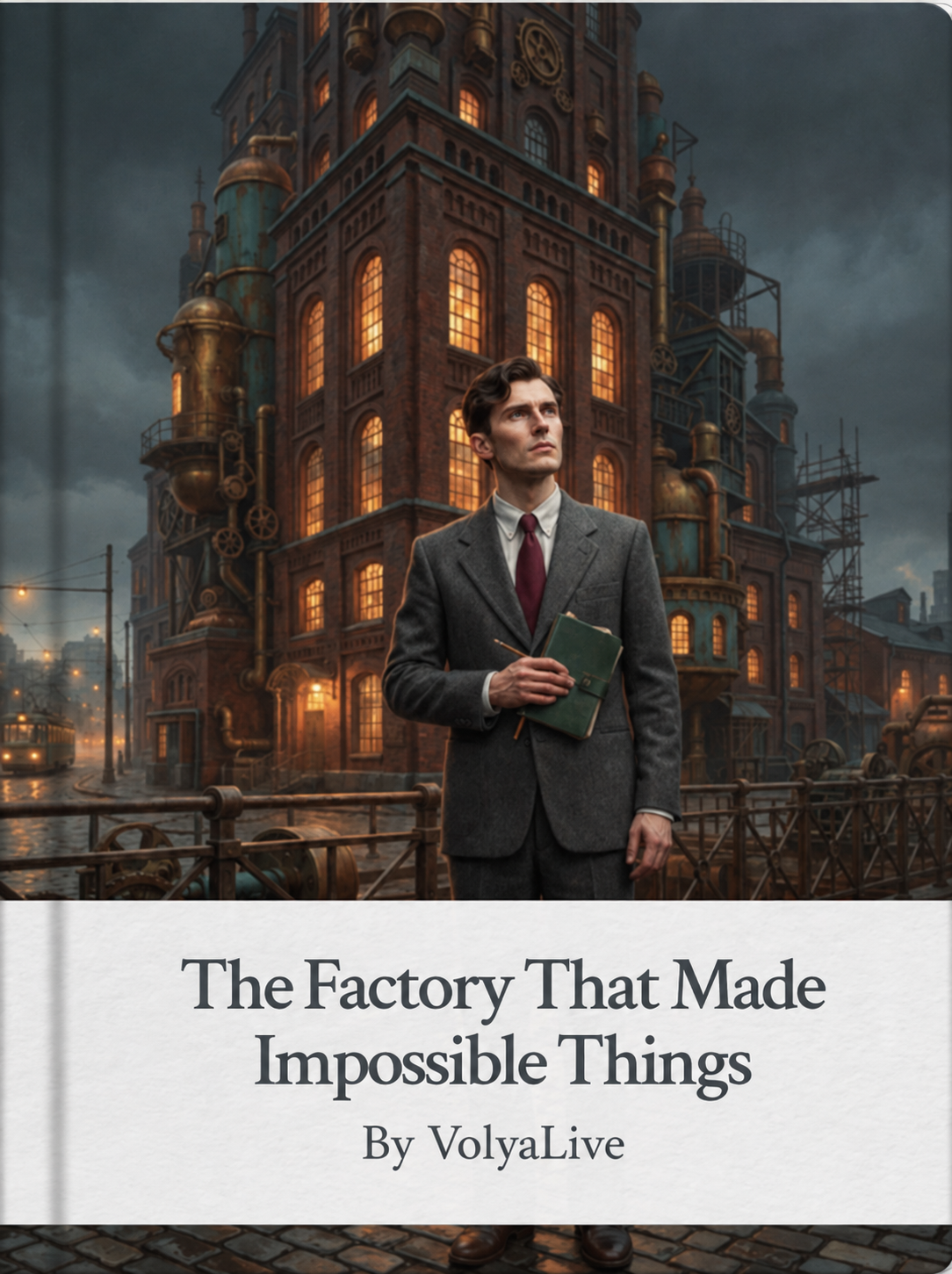
Sergey Murzo (1912–1937): The Poet Who Heard Spring in the City
Chapter 1. A Childhood Shaped by Work
Sergey Nikitovich Murzo was born in Moscow in 1912 into a working-class family. His early life unfolded in a society where industrial labour was increasingly presented as the foundation of a new future.
For young Sergey, work was not an abstract political idea. It was part of ordinary life: the effort of earning a living, the rhythm of working days, and the hopes of people who wanted their labour to lead to something better.
By the time he was a young man, he had become a lathe operator at the Comintern Machine-Tool Plant in Vitebsk. There, he encountered the industrial environment that would later appear in his poetry.
The factory offered a world of sharp contrasts. Machines moved with mechanical precision, metal rang against metal, and workers followed demanding routines. Yet behind every machine stood a human being with private thoughts, memories, and dreams.
Murzo’s experience as a worker gave him direct knowledge of this world. He would later try to bring something unexpected into it: a lyrical voice capable of finding beauty and emotion amid machinery.
Chapter 2. The Worker Who Became a Poet
Murzo began publishing his writing in 1929. In the early 1930s, he became associated with the Vitebsk Association of Proletarian Writers, a literary movement that connected poetry with working-class life and the social ambitions of the era.
He belonged to a group often described as shock-worker poets. Their writing frequently celebrated industrial labour, productivity, and the transformation of society.
But Murzo’s artistic ambition went beyond describing machines and praising work. He sought to introduce a more personal, lyrical way of seeing the industrial world.
In his imagination, the city was not merely a collection of factories, streets, and electric lights. It was also a place where people experienced loneliness, excitement, fatigue, friendship, and the sudden happiness of an ordinary evening.
A machine could provide the rhythm of a poem, but it could not replace the human heart.
This tension between the collective language of industrial progress and the private world of human feeling became one of the most distinctive aspects of his literary identity.
Chapter 3. Finding Spring Among the Machines
In 1934, Murzo graduated from the Belarusian State Higher Pedagogical Institute. He subsequently worked as a teacher at a secondary school in Krasnapolle, in the Mogilev region of Belarus.
Teaching gave him another way to connect with the world around him. The factory had exposed him to the physical rhythm of labour; the classroom placed him among young people whose futures were still taking shape.
His poetry suggests a desire to see beyond the immediate demands of work and study.
In one of his surviving poems, evening descends over dark buildings as electric lights begin to sparkle across the city. A student sits with his notes, attempting to concentrate, while thoughts wander elsewhere. Then spring seems to interrupt the routine, arriving through the breath of fresh air, the touch of the wind, and the restless movement of young maple trees.
The poem moves between the modern city and the natural world. Electricity illuminates the windows, but it is the wind and the arrival of spring that awaken the speaker’s deepest feelings.
This contrast captures something essential about Murzo’s poetry: even within a world fascinated by machines and productivity, he continued to search for spontaneity, tenderness, and joy.
His work reminds us that a person cannot be reduced to a worker, a student, or a social role. Every life contains an inner landscape that deserves to be heard.
Chapter 4. A Life Interrupted
The political atmosphere surrounding Belarusian writers became increasingly dangerous during the 1930s. Writers and intellectuals could be accused of disloyalty, and literary associations that had once offered opportunities for publication could not protect their members from repression.
On 3 November 1936, Murzo was arrested by the Belarusian NKVD in Minsk, or was brought to the city following his arrest. The surviving biographical account records that he was accused of belonging to an alleged anti-Soviet terrorist, espionage, and sabotage organisation.
On 28 October 1937, an extrajudicial NKVD body in the Belarusian SSR sentenced him to death.
The following day, 29 October 1937, Sergey Murzo was executed in Minsk. He was twenty-five years old.
His life ended at an age when many writers are only beginning to discover the full range of their artistic possibilities. The poems he might have written, the students he might have taught, and the experiences he might have recorded were lost with him.
The story of Murzo is part of the wider history of Belarusian cultural life devastated by Stalinist repression. Behind the dates and official accusations was a young poet whose work had sought to give human feeling a place in the industrial world.
Chapter 5. The Spring That Survived
For years, the official circumstances of Murzo’s death belonged to a history in which political accusations could destroy lives and silence writers.
On 10 November 1956, the Military Collegium of the Supreme Court of the USSR rehabilitated him.
Rehabilitation could not restore his lost years or return the poems he had never written. It could, however, challenge the verdict that had condemned him and make room for a more truthful account of his life.
Murzo’s biography survives through historical records, literary reference works, and the poetry he left behind. His surviving verses allow readers to encounter not merely a victim of repression, but a writer who tried to make room for beauty in a world dominated by work, machines, and political expectations.
The image of spring in his poetry carries a quiet significance. Spring is not an escape from reality; it is a reminder that human perception remains richer than any system that attempts to define it.
The city may grow dark. The working day may end beneath heavy buildings. A student may struggle to finish a page of notes. Yet the wind still moves through the trees, and the first warm evening can awaken feelings that no machine can manufacture.
Sergey Murzo’s life was tragically short, but the lyrical impulse at the heart of his poetry remains understandable across generations: even in a world of steel and strict routines, people continue to seek air, light, freedom, and the promise of spring.
Historical Note
Sergey Nikitovich Murzo was a Belarusian poet and teacher born in Moscow in 1912. He worked as a lathe operator at the Comintern Machine-Tool Plant in Vitebsk, graduated from the Belarusian State Higher Pedagogical Institute in 1934, and taught in Krasnapolle, Mogilev region. He began publishing in 1929 and was associated with the Vitebsk Association of Proletarian Writers. Arrested in November 1936, he was sentenced to death by an extrajudicial NKVD body on 28 October 1937 and executed the following day in Minsk. He was rehabilitated on 10 November 1956.
This account is based on published biographical reference sources. Interpretations of Murzo’s poetic themes are literary readings of the surviving material, not claims about his private thoughts or intentions beyond the available evidence.